

By Katherine Gutierrez
In a situation where teens open up, it can be normal for us adults to give our advice, correction, and biblically-based solutions. Meaning well, we respond in hopes to encourage our students and lead them effectively, but what if we are actually doing more harm than good? Although our students may benefit from our wisdom, it’s not the main reason why they choose to open up. Teens often need a space where they feel safe to express themselves, feeling seen and heard. When we fail to acknowledge their experiences and emotions, moving quickly past them to resolve their issues or answer their doubts, we miss the biggest opportunity: to understand and connect with them, speak life over their wounds, and create an authentic relationship with them.
When was the last time you listened to your student’s story, without trying to fix it or respond with the picture-perfect answer?
Sometimes we feel the need to respond perfectly to our students, as if they are looking for answers and solutions, when in reality, they want to feel seen and understood. If we focus too much on our response, instead of making sure our students feel acknowledged, we make it more about us and less about them. True discipleship begins with understanding, and true understanding begins with listening.
James reminds us that we ought to be quick to listen and slow to speak (1:19). James redefines how leaders and individuals in Christ should operate. Often, leaders are portrayed as the ones with eloquent words and wisdom, encouraged to speak first. But what happens when we preach instead of listening, correct before connecting, and answer questions before hearing the full story? It’s easy to jump into the resolution before we’ve really listened to what our students are saying, or rather, what they are trying to say. As we rush to tie the bow on their concerns, we unintentionally close the door to honesty. Our students pick up on what topics are “safe” to bring up, and if every confession or question leads to a lecture, they’ll eventually shut down and stop sharing altogether.
Listening isn’t passivity; it’s the most active form of love and discipleship we can offer. When we listen, we show our students that they matter, their story matters, and their faith journey matters.
Jesus modeled this perfectly. When He talks with the woman at the well in John 4, He didn’t start by correcting her; He started by simply listening. He asked questions. He let her speak her mind. Amid being truly heard, she was transformed. In fact, Jesus asked 183 questions in the gospel recordings of his ministry, and only directly answered a handful.
By doing this, we allow the Holy Spirit to guide the thoughts of our students, leaving room for Him to give revelation and insight to their struggles, offering clarity and space for reflection. We can prompt our students to think honestly and deepen their faith in Christ by fostering that relationship through simply being present and listening to them.
Here are a few tips and practical ways we can listen with intention and meaning:
1. Ask open-ended questions.
Instead of, “Did you read your Bible this week?” try, “What’s something God’s been showing you lately?” Questions that invite stories, not yes-or-no answers, help teens open.
2. Do not rush to respond.
Silence can feel awkward, but it’s okay to pause before replying. Give them room to process and keep sharing.
3. Reflect what you hear.
Say things like, “It sounds like you’re feeling distant from God lately,” or “You’re frustrated because your prayers don’t feel answered.” This shows empathy and understanding.
4. Stay curious, not critical.
When a student or child expresses doubt, resist the urge to “fix” it immediately. Instead, thank them for being honest. Let that vulnerability be honored.
5. Follow up.
Remember what they told you. Ask about it later. It communicates care and consistency, which are two things every young person needs in a safe mentor or parent.
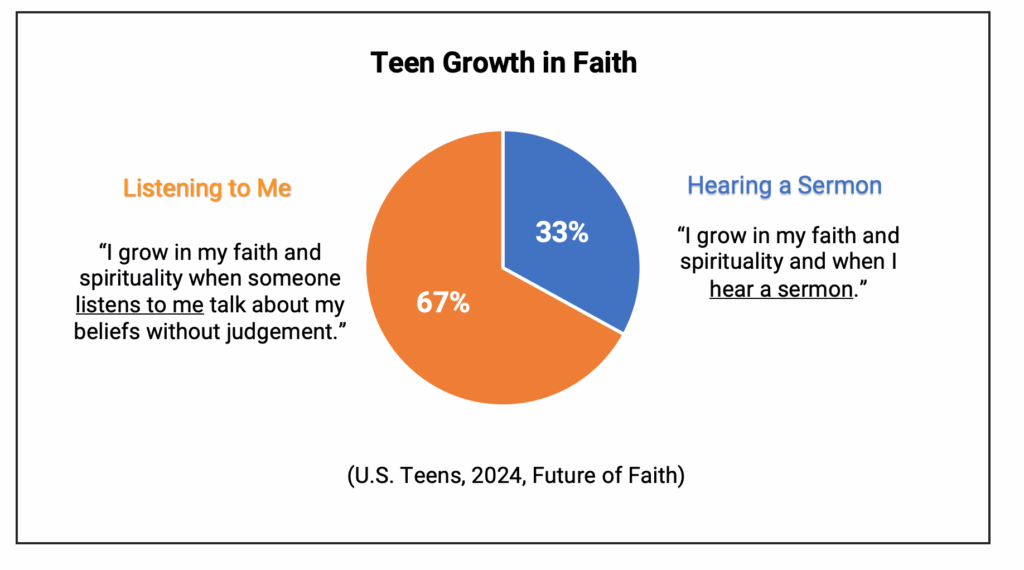
When we listen to our students, incredible things start to happen. Not only do our students open up more, but we start to truly see their hearts come alive. We can deepen their trust in us and create a secure environment for them to explore their faith more deeply. By doing so, we foster relationships with depth and meaning, allowing their walk to become one of fellowship and confidence, knowing they can ask questions without being judged or turned away, but being met with the love of the Father.
This week, we want to challenge you to have one conversation with your student or child where your goal isn’t to teach but to listen. Ask questions. Be curious. And most importantly, be present. And allow them to lead the conversation. When they finish sharing, resist the urge to wrap it up with sound advice. Instead, just thank them for trusting you with their thoughts. You might be surprised by how deeply that moment of listening connects you both, and how powerfully God can move when you make space for Him to speak through their story. As a reminder, you don’t have to have the perfect response or solution. You just have to make room for their voice. That’s where discipleship begins, in a sacred space where listening takes place. Where your students can be truly heard.